
PROCEDURE & WORKFLOW
GRIEVANCE REDRESS MECHANISM (GRM)
AGENDA
Spectrum Grievance
Benchmarking GRM
GRM Procedure and Workflow
1
2
3
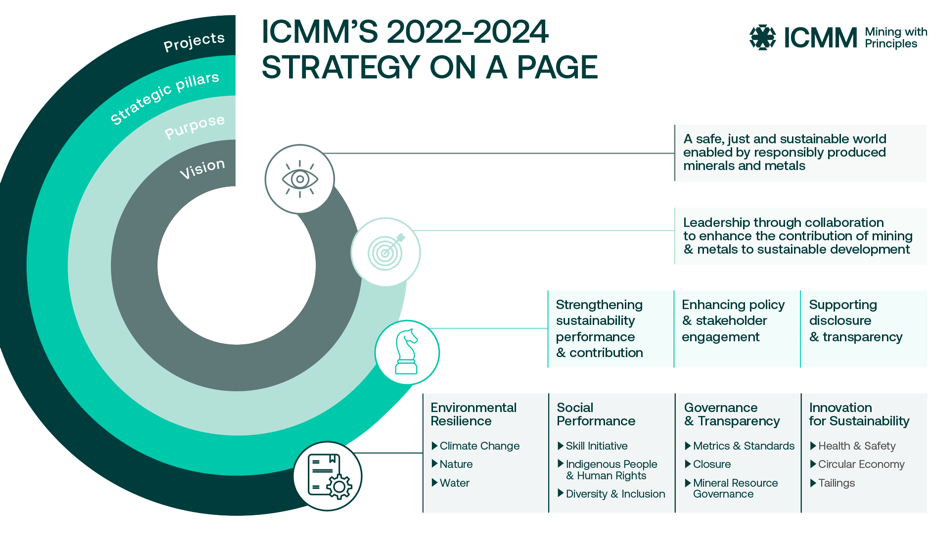
MANY EFFORTS TO ENCOURAGE RESPONSIBLE AND SUSTAINABLE MINING PRACTICES
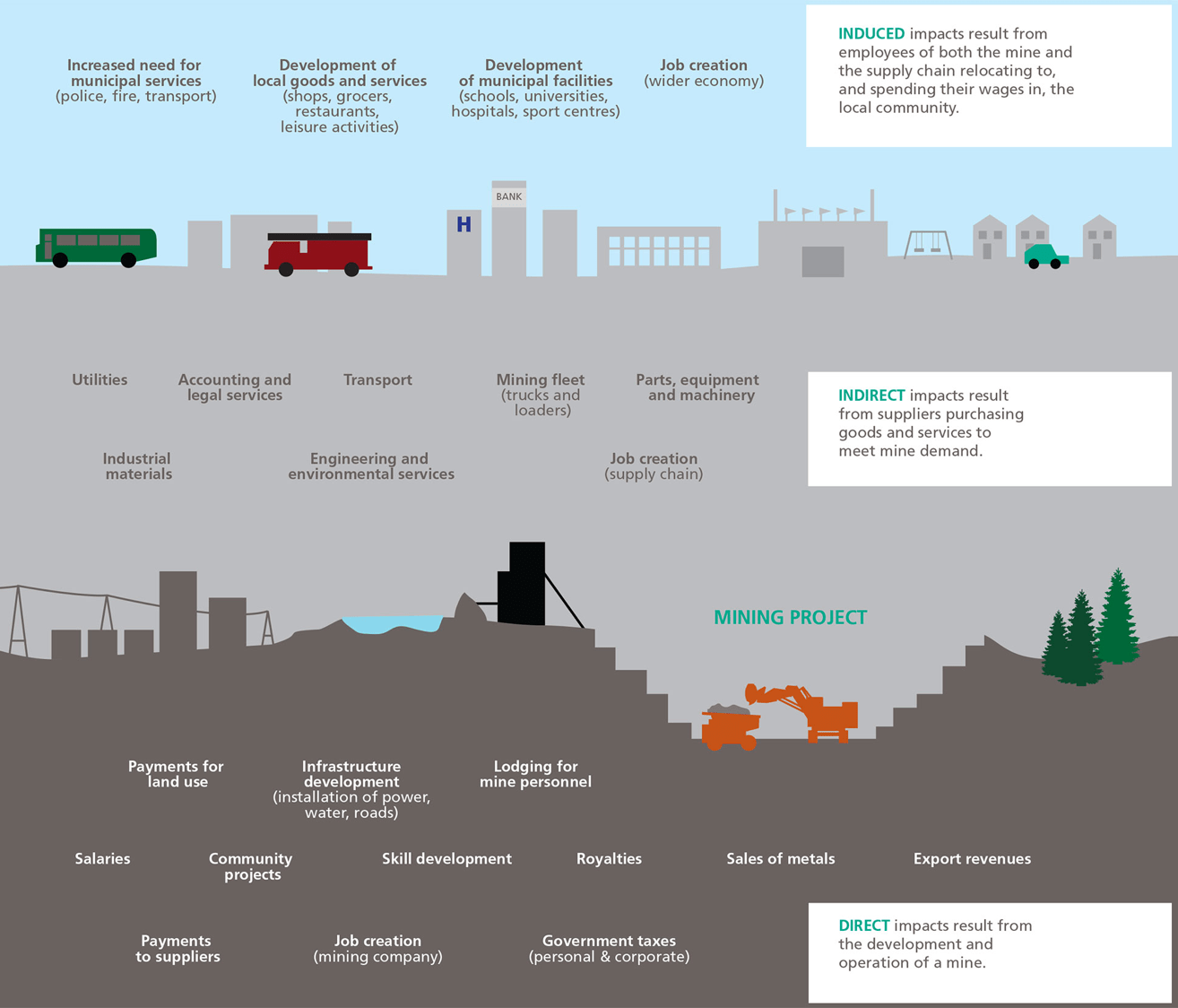
SPECTRUM OF POSITIVE MINE IMPACTS (DIRECT, INDIRECT & INDUCED)
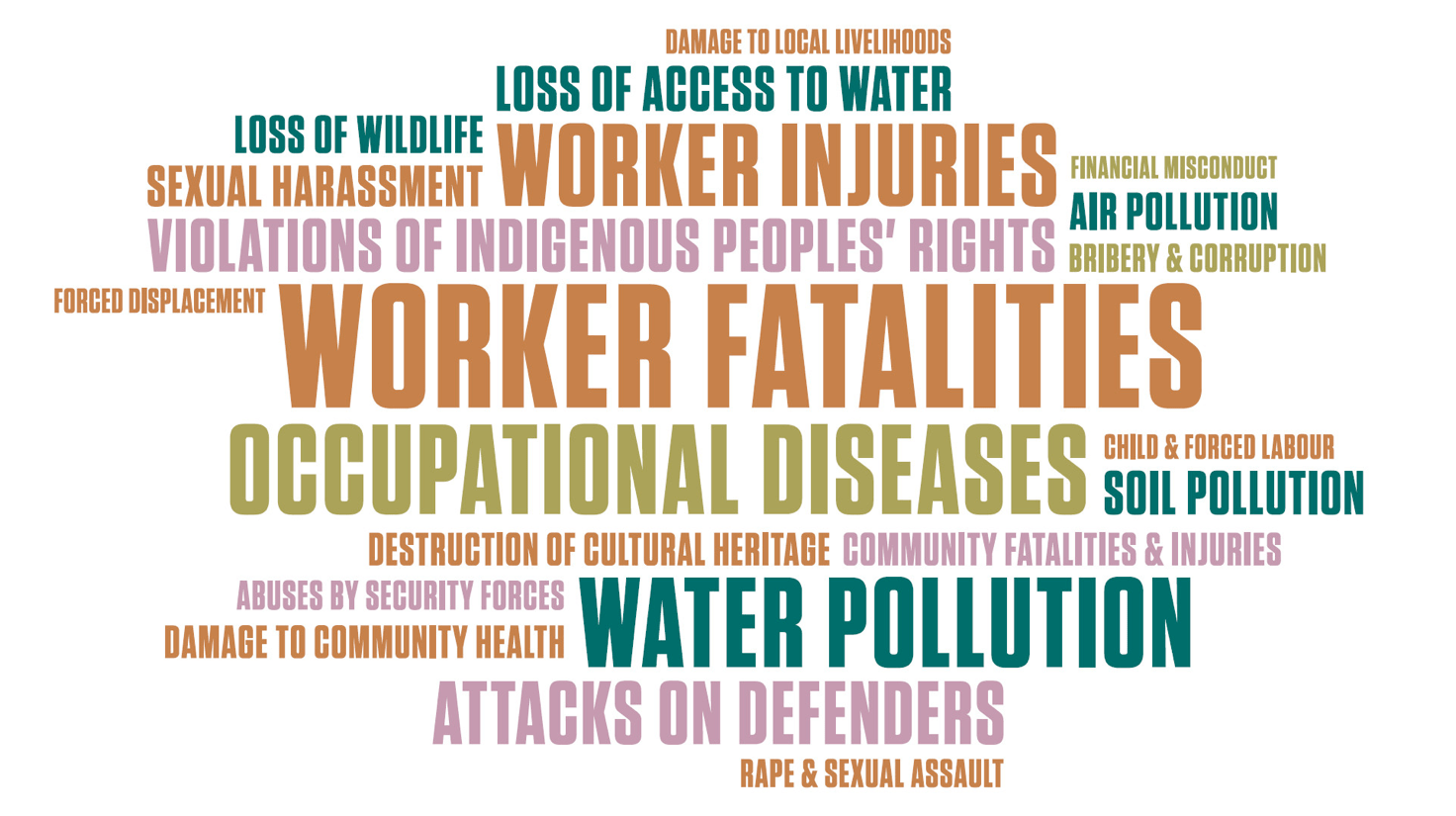
Negative Impact
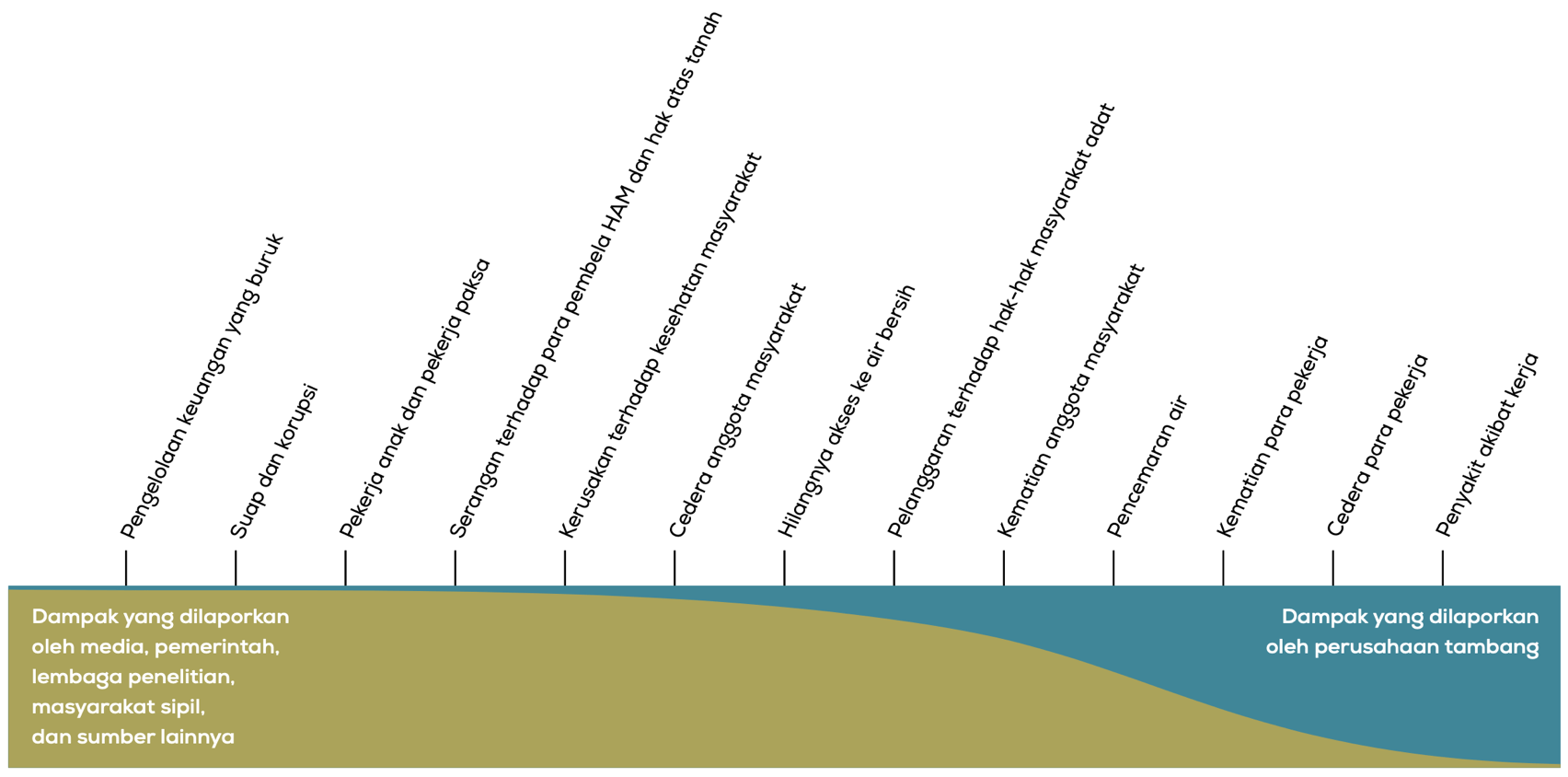
POTENTIAL IMPACTS OF MINING OPERATIONS BASED ON THE SPECTRUM OF REPORTING SOURCES
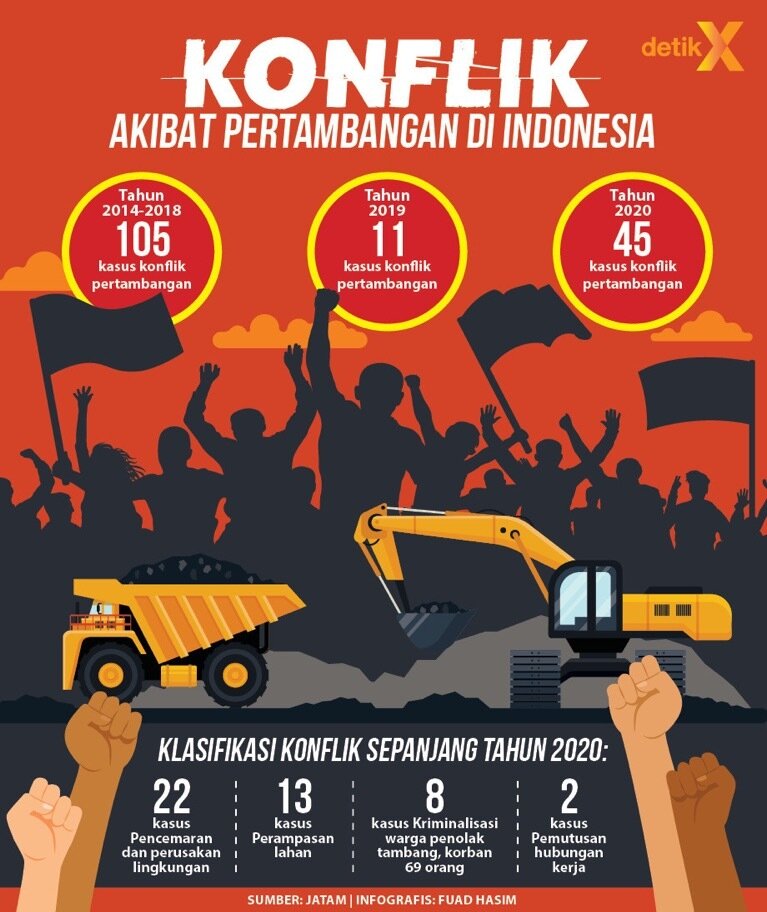
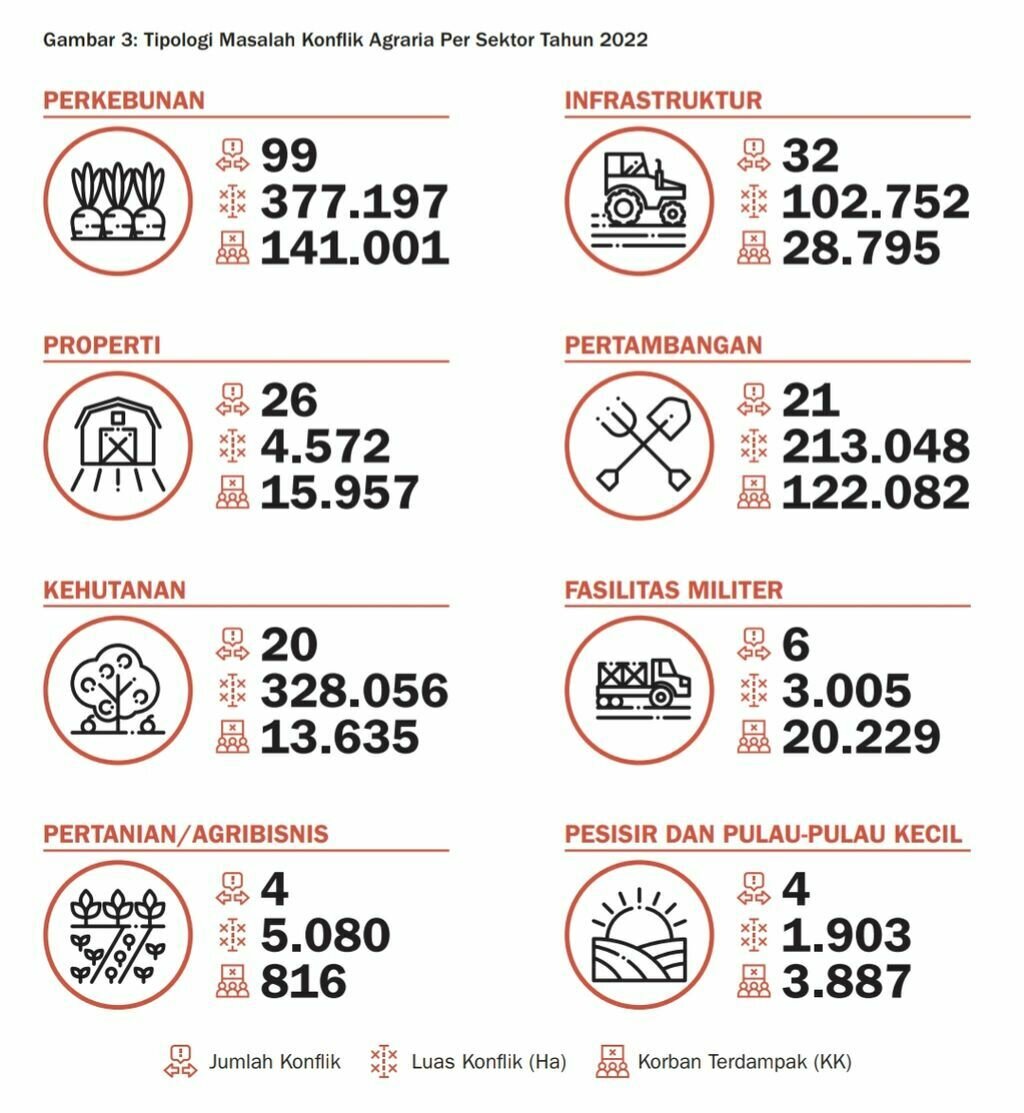
How is GRM Characterized in Mining Projects?

GRM –Merger & Acquisition (M&A)
- Pre-acquisition due diligence includes attention to potential human rights issues and unresolved grievances, given the costs and challenges involved in trying to resolve 'legacy' issues.
- As companies acquire new assets, they may unwittingly become involved in 'legacy' grievances that are not easily identified in pre-acquisition due diligence.- In the context of M&A, companies have the opportunity to evaluate and redesign ineffective grievance mechanisms
- Conversely, if an effective grievance mechanism exists, this should be understood as an asset that the project or operation should retain.
Key Issues:
- Where a company acquires a company with a history of unresolved grievances, under the UNGPs, the company also has a responsibility to address any other concerns (as distinct from any legal responsibilities). This may require the creation of a clear grievance or dialog process, and consideration by the company of how it can bring the relevant parties to the negotiating table to seek resolution.
- These issues can be prevented by involving the company's M&A lawyers (and wider team) in the risk assessment process and the extent to which they capture human rights-related risks.
Key Action:
GRM – Exploration Phase
- Common grievances may relate to access to land, environmental disturbance, and potential impacts to cultural heritage or sacred sites.
- There are likely to be fewer staff and resources available during the exploration phase, but companies can still have simple processes that meet the effectiveness criteria of the UNGPs.
- Company failure to respond to community concerns, or failure to keep commitments made in response to those concerns, may resurface in later stages of the project in the form of reduced trust from communities and increased grievances, making them more difficult to resolve.
Key Issues:
- Grievance management can be closely linked to early stakeholder engagement efforts, as a means of identifying community concerns about the project, as well as informing communities about company plans and activities.
- While the process of gathering concerns/grievances may be more informal at this stage, it is important to formalize internal processes for reviewing and addressing community concerns and tracking responses.
Key Action:
GRM –Land Acquisition & Resettlement Phase
- At this stage, there is a risk of potentially severe impacts and serious grievances, especially if there is a government-led resettlement process.
- There are specific risks:Grievances related to the actions of security forces in the event of forced evictions, where fears of retaliation may also be high.
- Complaints about compensation.
- Long-term grievances regarding the community's sustainable livelihoods.
Key Issues:
- Design a different and customized grievance redress process for the resettlement process.
- Involving independent assessors of compensation claims as part of the process would be beneficial.
- Consideration should be given to other available avenues, if compensation offers are disputed. Other respected local or national institutions may be an agreed central point of recourse, when the court system is not available, functioning or appropriate for such cases.
- Additional guidance on grievance mechanisms for land acquisition and resettlement is provided in IFC Performance Standard 5.
Key Action:
GRM – Construction Phase
- This is an important phase for the potential human rights impacts and risks to companies from losing their social license to operate.
- Complaints are often related to:
- Noise, dust and other disturbances caused by construction activities.
- Influx of construction workers from outside local communities and/or ethnic groups and antisocial behavior. Impacts on the environment and landscape.
Key Issues:
- While most issues may seem trivial and insignificant, it is important that construction and other staff understand the cumulative impact they can have on local community confidence and the company's license to operate;
- The importance of developing a common and coordinated approach to grievance management with all contractors and subcontractors taking an active role during this stage of the project.
- The ability of a senior community relations officer to delay operations, in part or in full, due to serious community grievances can have a powerful impact in getting those responsible for construction impacts to take a serious role in avoiding those impacts.
Key Action:
GRM – Operation Phase
- A wide range of grievances may relate to different aspects of operations, including grievances related to human resources (e.g. employment and training opportunities), contractor and supplier behavior, and environmental and social impacts.
- Grievances may increase when there are changes to the business (e.g. expansion, changes to transportation routes, maintenance and upkeep) or country/operational context (e.g. political upheaval or controversy, or economic crisis).
Key Issues:
- Companies should not assume that a grievance mechanism that is appropriate and functioning well at the start of operations will remain so over time.
- Grievance mechanisms should be reviewed periodically with a view to adapting them to the evolving composition, needs and concerns of communities, paying particular attention to vulnerable groups.
- The grievance mechanism should be reviewed periodically in collaboration with communities to test and improve its effectiveness.
Key Action:
GRM – Post Mine Phase
- Complaints are usually about:
- Impacts resulting from loss of employment, business opportunities and social investment.
- Concerns about plans for rehabilitation of the area, and long-term environmental monitoring.
Key Issues:
- Companies should proactively engage with stakeholders to provide timely information. This allows affected stakeholders to adapt to the reality of closure and have a voice in closure and reclamation planning.
- In anticipation of a reduced company presence in this period, it is important to consult with communities and other relevant actors (e.g. MoEF, MEMR, etc.) on long-term grievance management channels and responsibilities.
Key Action:
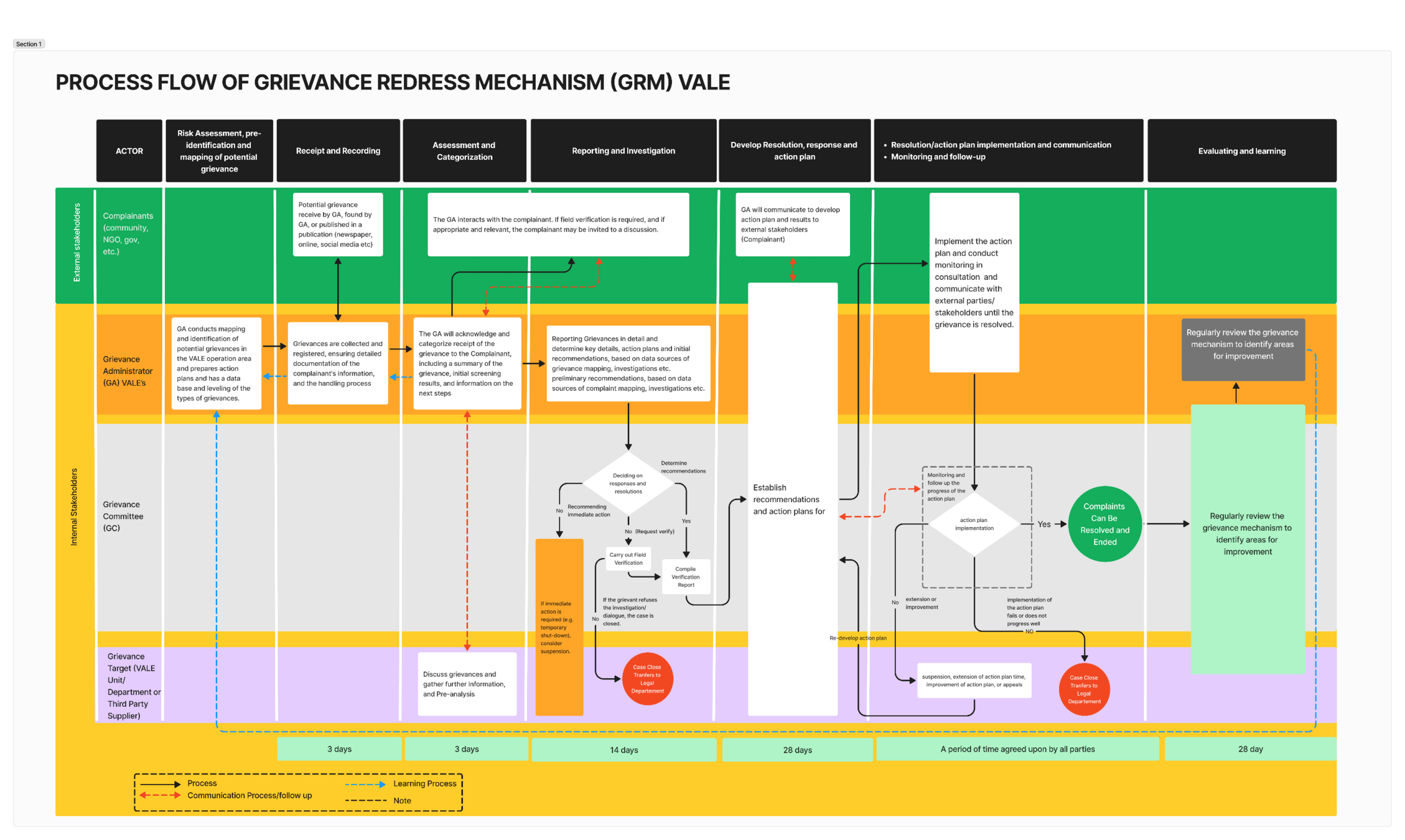
Procedures: 8 Key Steps of VALE’s GRM
1
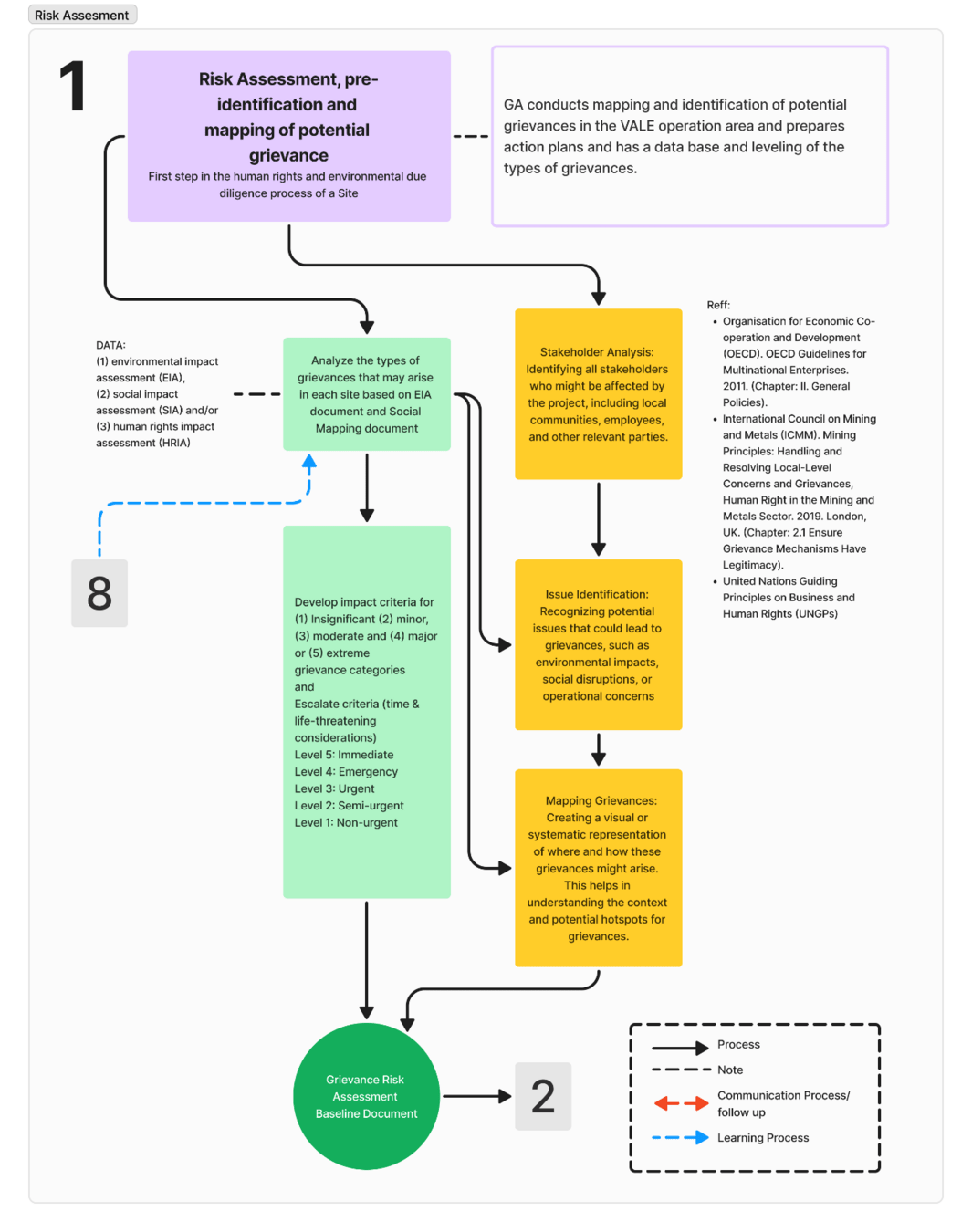
Risk Assessment, Pre-Identification, and Mapping
2
Receive and Record Grievances
3
Assessment and Categorization
4
Reporting and Investigation
5
Develop Resolution and Action Plan
6
Resolution and Communication
7
Monitoring and Follow-Up
8
Evaluating and Learning
Grievance Administrator (GA) at VALE office: to be a reliable point of contact and ensure the grievance resolution process works accordingly
VALE Unit/Department: The department that caused the impact of the grievance, as well as those related to the grievance, including the department that has the authority to resolve the grievance.
Grievance Committee (GC): The Grievance Committee is responsible for making management decisions in relation to grievances. It is responsible for approving action plans designed to resolve grievances and for approving official correspondence to external parties in relation to verified grievances. If VALE verifies that one of its suppliers is in breach of the Policy, the Grievance Committee will refer the findings to the VALE “department/unit in VALE that cooperated with that supplier” and determine appropriate remedial actions which may include the suspension of business relationships with suppliers.
Role and Responsibility
A dedicated staff member (e.g., from Sustainability or Community Relations) who manages the GRM’s day-to-day operations. The GA is the GRM’s “traffic controller,” ensuring
complaints move smoothly through all steps, keeping things organized, transparent, and on track to avoid delays or mistrust.
Key Point: Like a project manager, the GA runs the show daily, ensuring no complaint gets lost.
Grievance Administrator (GA)
Roles and Responsibilities:
-
Step 1 (Risk Mapping): Helps identify potential grievance risks (e.g., pollution hotspots) and updates risk lists.
-
Step 2 (Receive and Record): Collects complaints via hotline, portal, or in-person, logs them in the GRM system (e.g., Borealis), and assigns case IDs.
-
Step 3 (Assessment): Reviews complaints for validity, categorizes them (e.g., Environmental, Labor), and flags urgent ones (e.g., high severity).
-
Step 4 (Investigation): Coordinates investigations, assigning tasks (e.g., site visits) and ensuring evidence (e.g., test results) is logged.
-
Step 5 (Resolution Planning): Supports plan drafting, gathering input from teams, and tracks plan progress.
-
Step 6 (Resolution): Monitors fix implementation (e.g., repairs done) and updates complainants (e.g., via SMS).
-
Step 7 (Monitoring): Checks if fixes work (e.g., retests), logs feedback, and follows up on gaps.
-
Step 8 (Evaluating): Compiles case data, tracks trends (e.g., repeat issues), and suggests GRM improvements.
Grievance Administrator (GA)
Roles and Responsibilities:
A group of senior staff (e.g., managers from Operations, Legal, Sustainability) who oversee the GRM, make big decisions, and ensure fairness. : The GC is the “decision board,”
ensuring resolutions are fair, legal, and effective, preventing costly escalations (e.g., 30% savings, World Bank 2022).
Key Point: Like judges, the GC keeps the GRM accountable and strategic.
Grievance Committee (GC)
Roles and Responsibilities:
-
Step 1 (Risk Mapping): Approves risk priorities (e.g., high-severity zones), ensuring alignment with Vale’s goals.
-
Step 2-3 (Receive and Assess): Provides guidance on complex or sensitive complaints (e.g., legal risks), ensuring proper categorization.
-
Step 4 (Investigation): Reviews investigation findings for high-severity cases (e.g., major pollution), ensuring accuracy.
-
Step 5 (Resolution Planning): Approves resolution plans, checks budgets (e.g., “Is $100K enough?”), and ensures compliance (e.g., UU Minerba).
-
Step 6 (Resolution): Oversees major fixes, resolves disputes (e.g., if complainants disagree), and signs off on completion.
-
Step 7 (Monitoring): Reviews monitoring results, approves follow-up actions (e.g., extra training), and ensures no recurrence.
-
Step 8 (Evaluating): Analyzes GRM performance, approves system updates (e.g., new risk maps), and reports to leadership.
Grievance Committee (GC)
Roles and Responsibilities:
Teams like Environmental, Community Relations, Operations, Legal, and HR, supporting the GRM as needed. These teams are the “specialists,” bringing expertise to solve specific issues, ensuring the GRM works across Vale’s operations.
Key Point: Like a toolbox, each department adds skills to get the job done.
Other Departments
Roles and Responsibilities:
-
Environmental Team:
-
Steps 1, 4, 7: Maps pollution risks, conducts tests (e.g., water quality), monitors fixes (e.g., retests).
-
Why: Ensures environmental compliance, reduces risks like spills.
-
-
Community Relations:
-
Steps 2, 4, 6, 7: Receives complaints, interviews stakeholders, communicates fixes, gathers feedback.
-
Why: Builds trust with locals, prevents protests.
-
Other Departments
Roles and Responsibilities:
-
Operations:
-
Steps 4, 6, 7: Provides data (e.g., equipment logs), implements fixes (e.g., repairs), checks outcomes.
-
Why: Ensures mining processes align with resolutions.
-
-
Legal:
-
Steps 3, 5, 6: Checks compliance (e.g., Law No. 32/2009), drafts agreements (e.g., compensation), advises on risks.
-
Why: Keeps Vale lawful, avoids fines.
-
-
HR:
-
Steps 4, 5, 7: Handles labor grievances, trains staff (e.g., GRM modules, April 9 chat), monitors workplace fixes.
-
Why: Supports workers, improves morale.
-
Kemp, D., & Bond, C. J. (2015). “Mining and Community Grievances: A Case Study Analysis.” Resources Policy, 45, 256-263.
-
Supports clear roles (e.g., GA for coordination, GC for oversight) scaling with grievance severity (Low to Critical) in mining GRMs.
-
Access: ScienceDirect.
World Bank (2014). “Grievance Redress Mechanisms: A Global Review.”
-
Highlights defined roles (e.g., administrators, committees, specialists) to match grievance urgency, cutting costs by 30%, as noted in Roles doc (p. 4).
-
Access: World Bank.
Reference
Rees, C., & Vermijs, D. (2011). “Mapping Grievance Mechanisms in the Business and Human Rights Arena.” Harvard Kennedy School, Corporate Social Responsibility Initiative.
-
Details roles like GA for daily tasks and GC for strategic decisions, tied to severity-based prioritization in GRMs.
-
Access: Harvard.
International Council on Mining and Metals (ICMM) (2019). “Handling and Resolving Local-level Concerns and Grievances.”
-
Recommends role clarity (e.g., departments for expertise, GC for approvals) to handle grievances by impact, aligning with Vale’s structure (Roles doc p. 1-3).
-
Access: ICMM.
Vale Sustainability Report (2023).
-
Confirms stakeholder engagement teams (e.g., Community Relations) and governance boards (e.g., GC), supporting roles in GRM operations.
-
Access: Vale.
FLOW GRM

FLOW OF GRM
Step 1
Grievance level assessment, pre-identification and mapping of potential grievance
Step 2
Receive and recording grievance
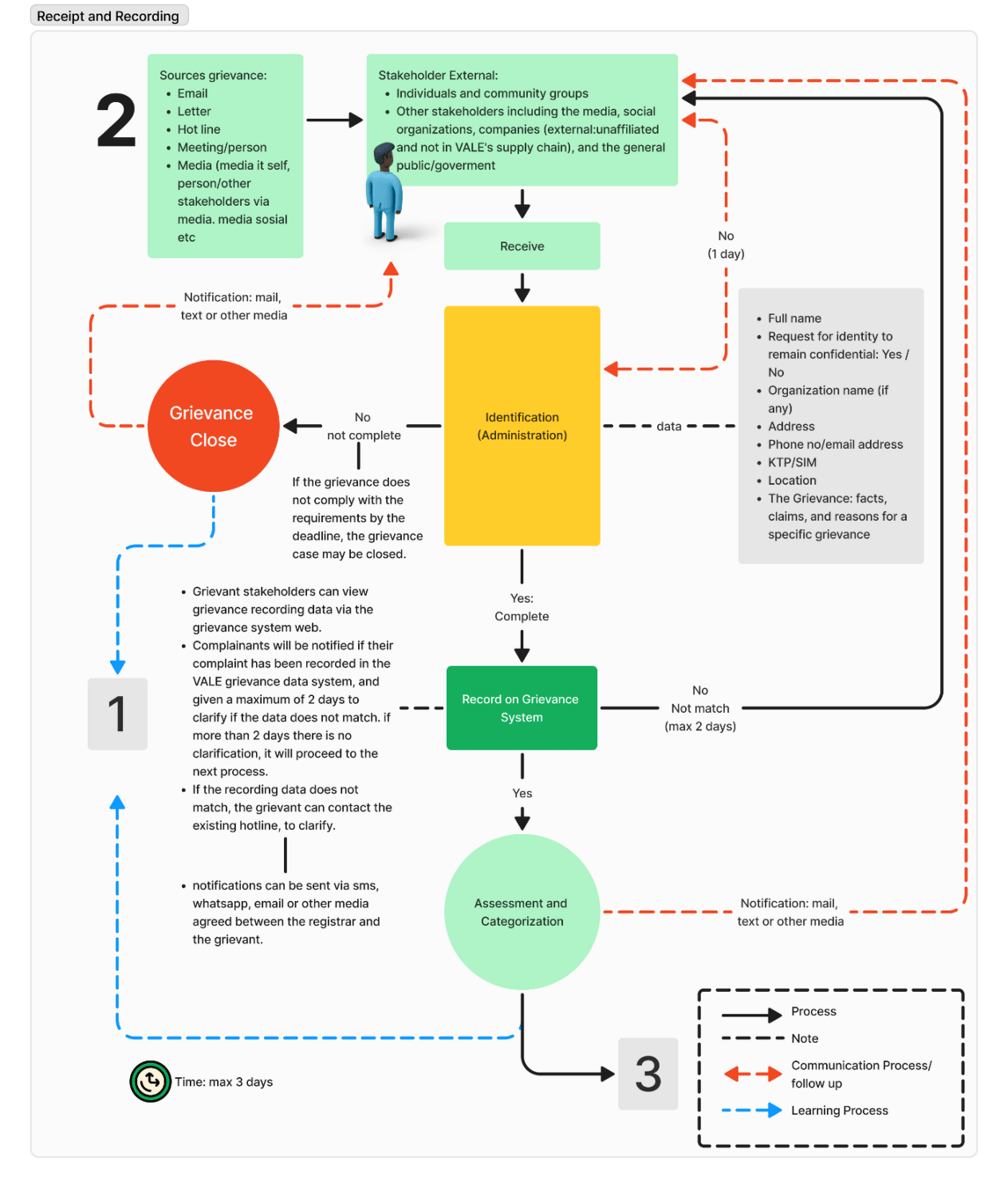
Step 3
Assessment and Categorization
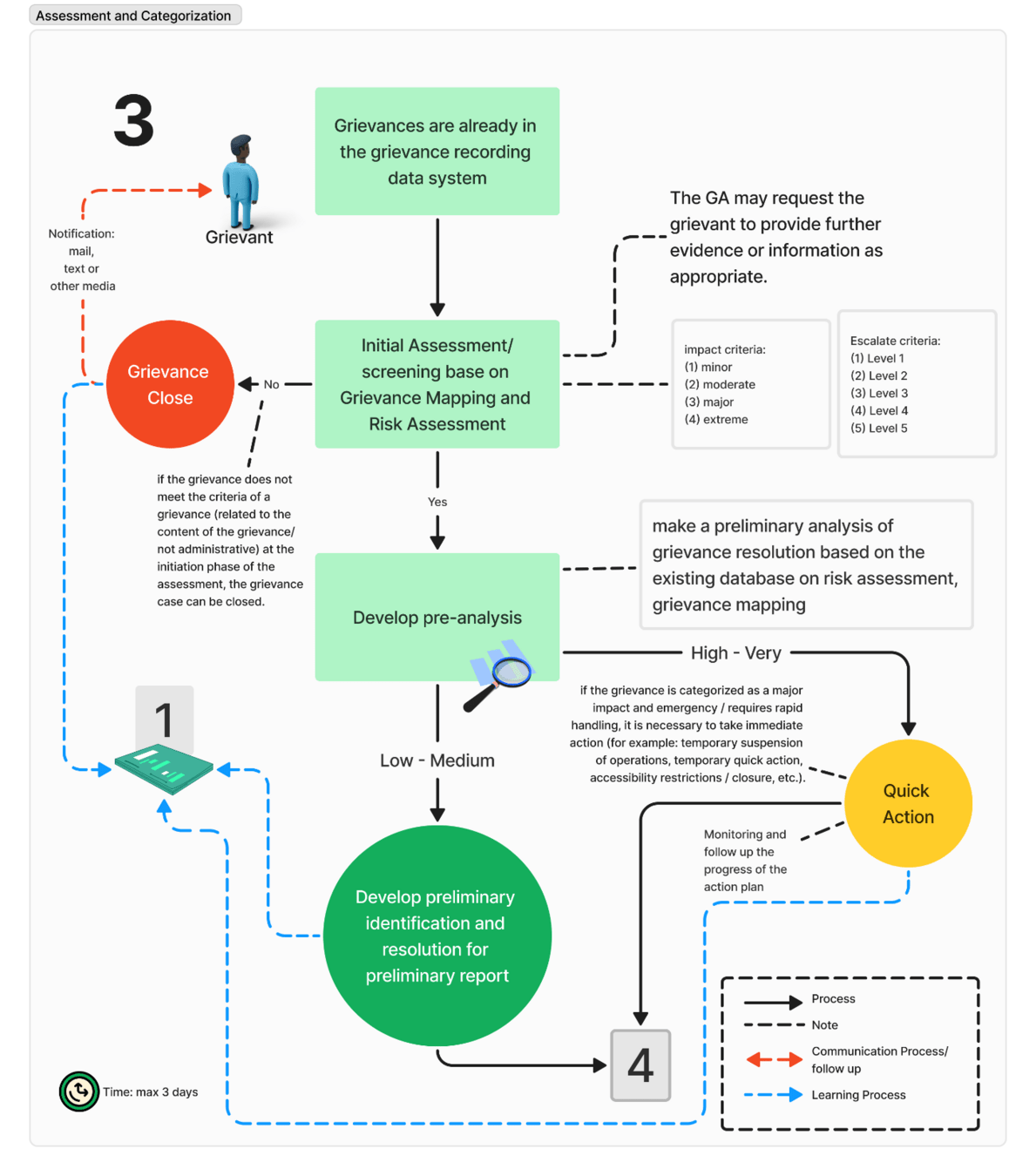
Step 4
Reporting and Investigation
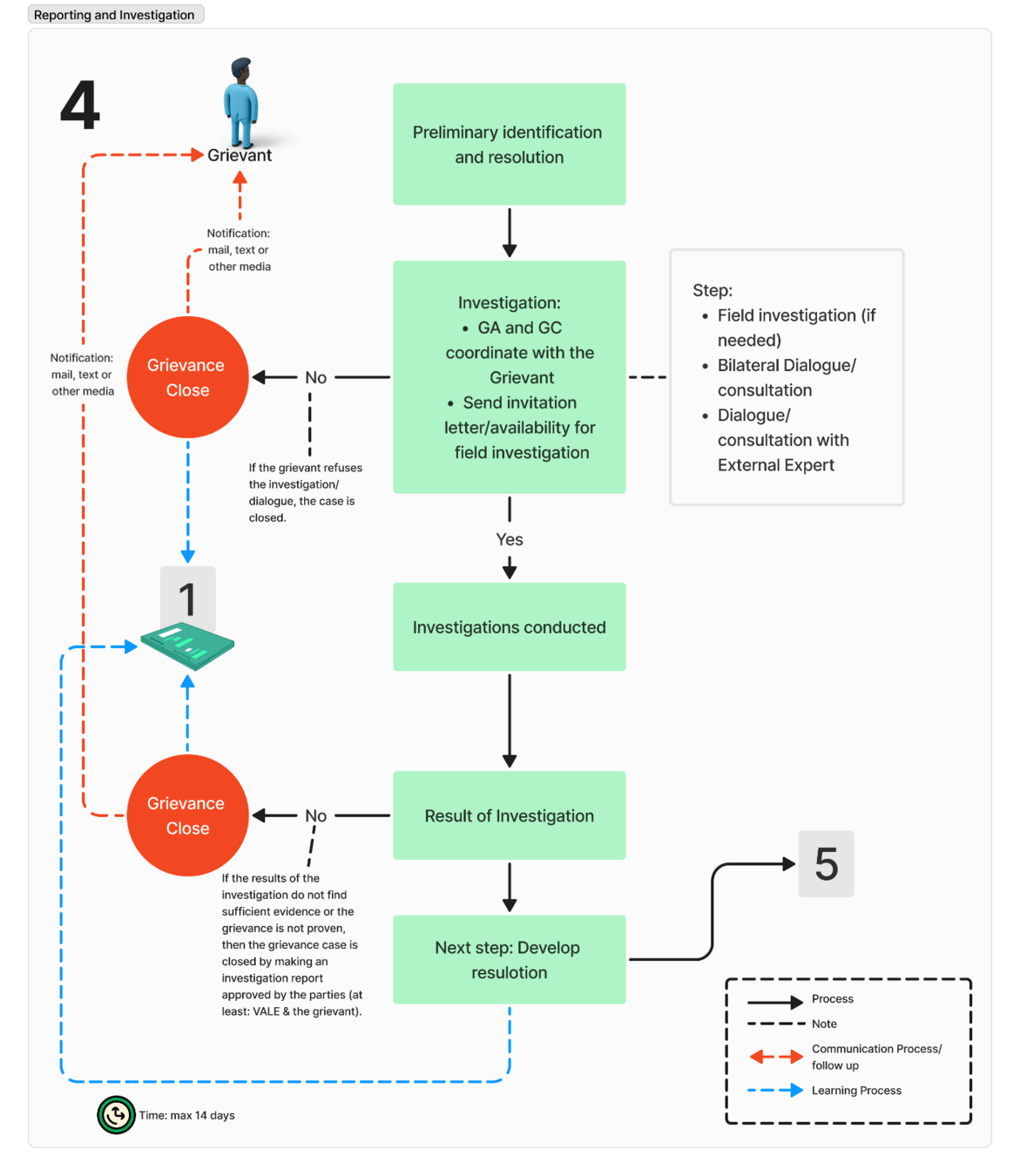
Step 5
Develop Resolution, response and action plan
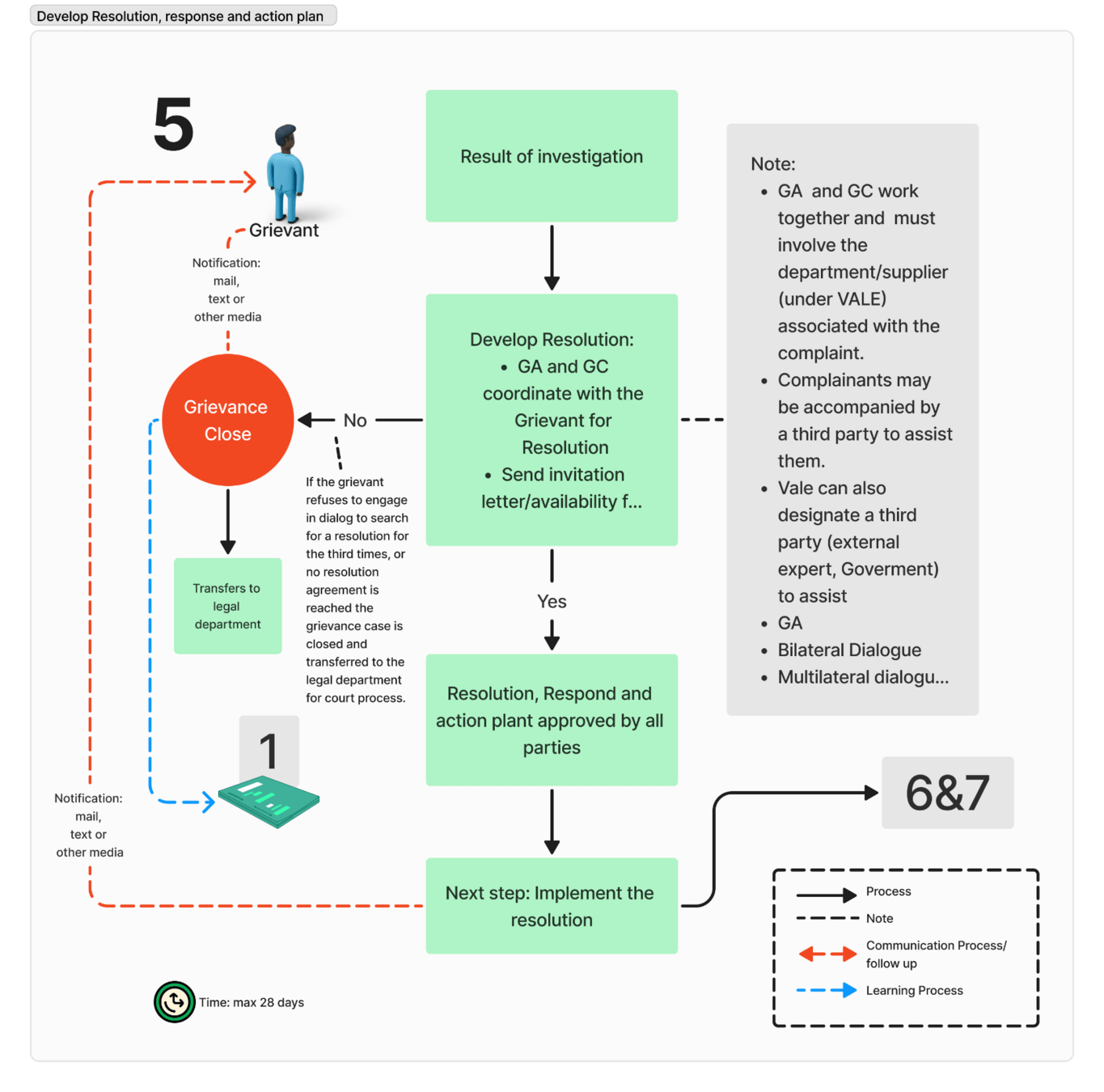
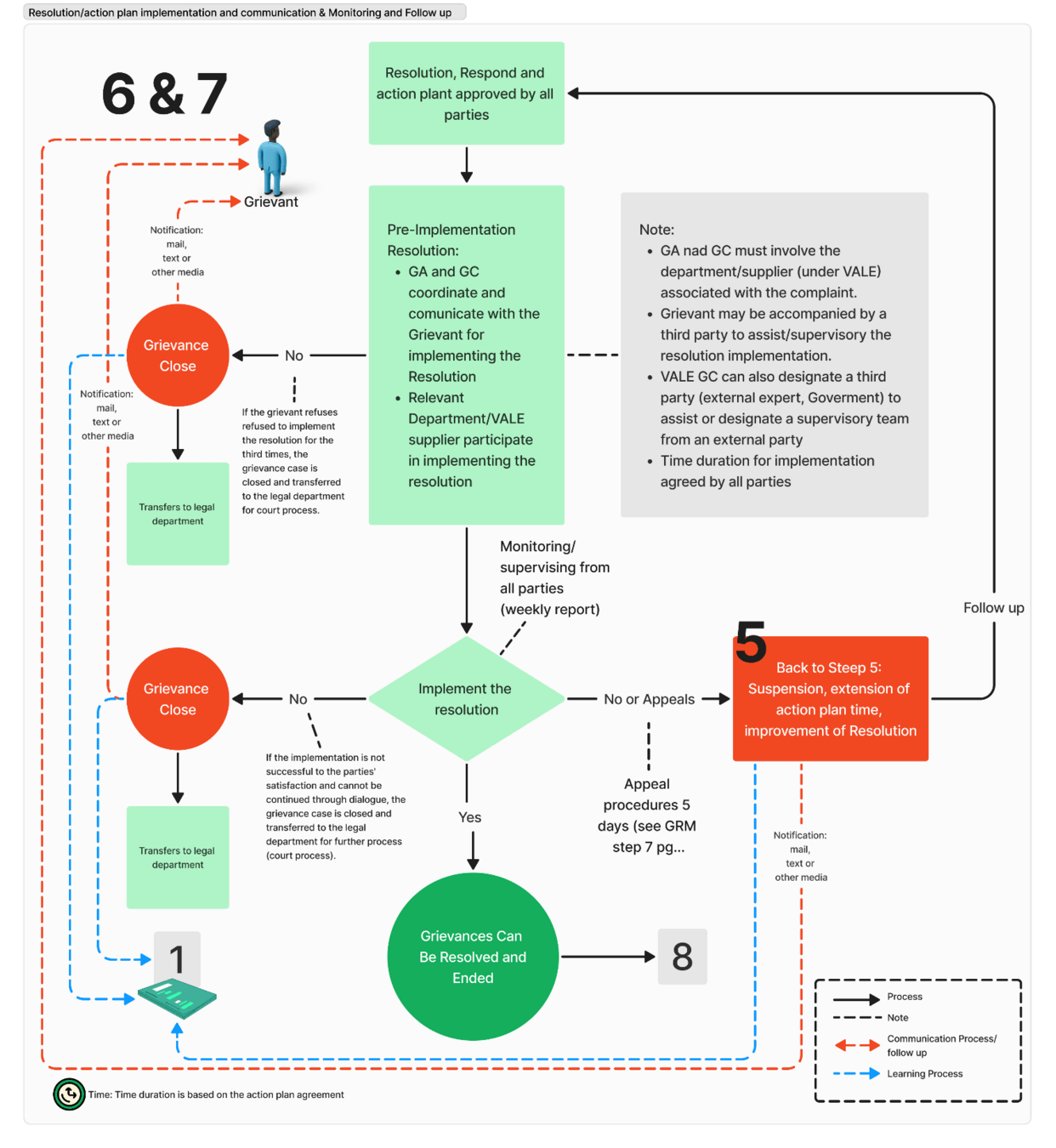
Step 6-7
Resolution/action plan implementation
and communication & Monitoring and follow-up
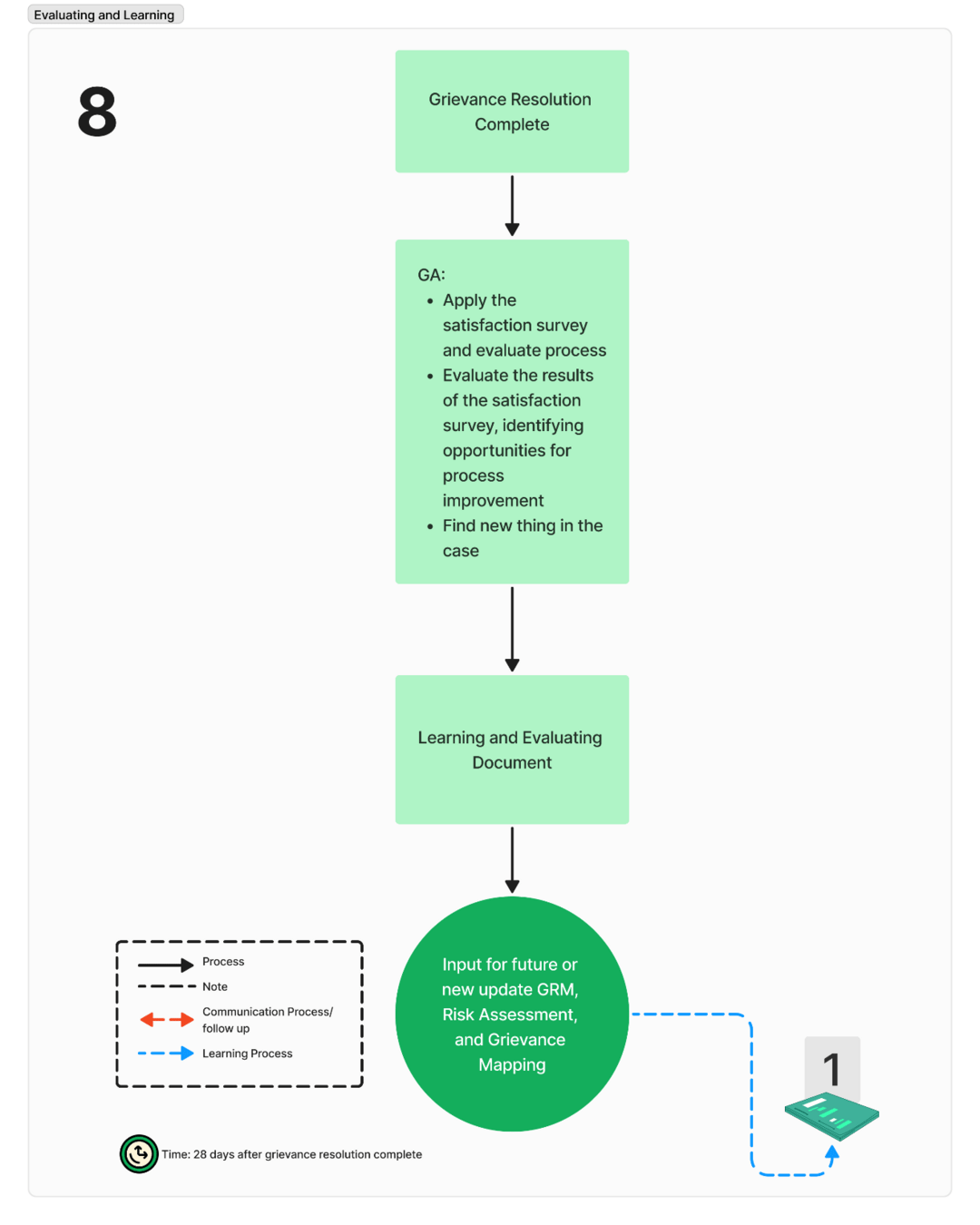
Step 8
Evaluating and learning
Thank You